Shop By Bag
Prices shown are for twenty-five bags with a one-colour print on one face. Foil, embossing and second faces are priced per job on the finishes page.
Most bag printers start at a thousand. We start at twenty-five, on the same board and the same presses — because a shop opening one door does not need a pallet in the stockroom.
The Range
A catalogue of four hundred bag styles is a catalogue nobody has ever made all of. Ours is six, held in stock as blanks, printed to order. Every one has been through the studio enough times that we know how it folds, how it takes foil, and how it behaves when someone puts a heavy candle in it.
Blanks in kraft, white and black; handles in cotton rope, grosgrain ribbon or twisted paper. Print goes on afterwards, which is why twenty-five is possible at all.
Prices shown are for twenty-five bags with a one-colour print on one face. Foil, embossing and second faces are priced per job on the finishes page.
Ranked by orders placed over the last twelve months, not by what we would rather sell you.
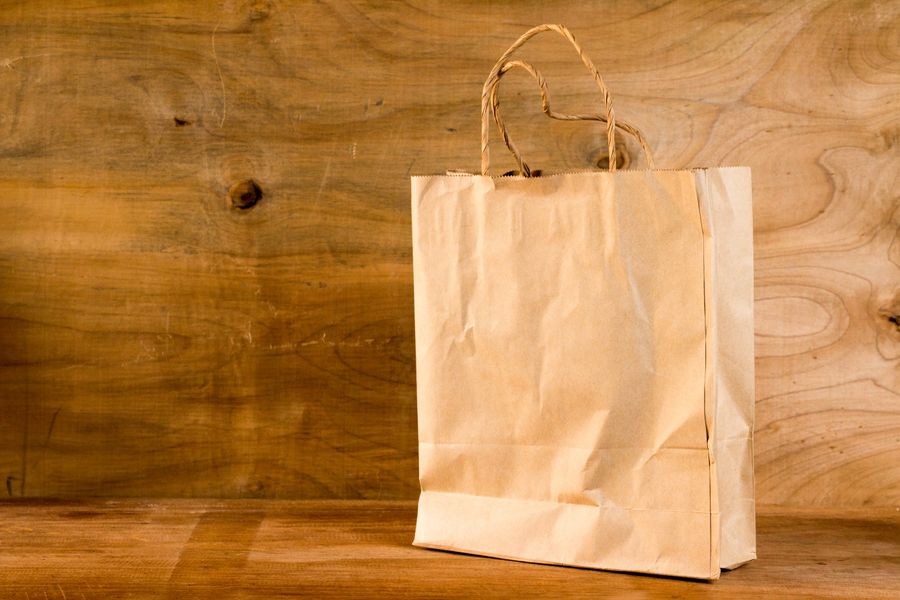
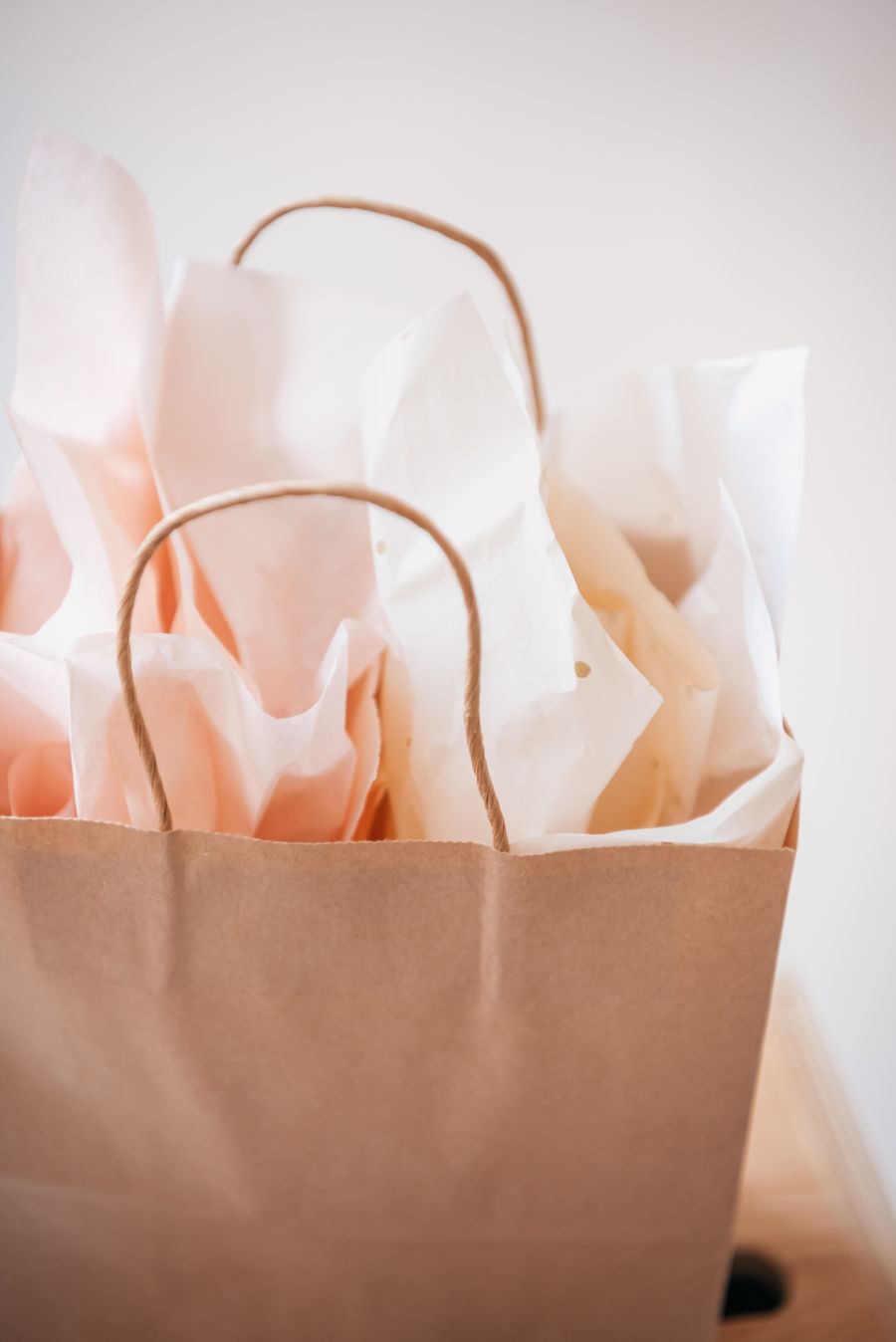
The default for a market stall, a bakery counter or a first branded bag. Takes a one-colour print beautifully and foil badly — the ribbing fights the die.
220 × 250 × 100 mm · 180gsm
View → 02Jewellery, candles, anything where the bag is part of the gift. The turn-over top is what makes it feel expensive; skip it and you have a paper bag with ribbon on.
160 × 200 × 80 mm · 250gsm
View → 03The cheapest way to make an unbranded bag look considered. Most people order this after their first bag run, having discovered the inside of the bag is visible.
500 × 750 mm · 17gsm acid-free
View → 04Clothing and homeware. Matt lamination survives rain and fingerprints; gloss shows every one. We stopped stocking gloss in 2021 and nobody has asked.
320 × 400 × 120 mm · 210gsm
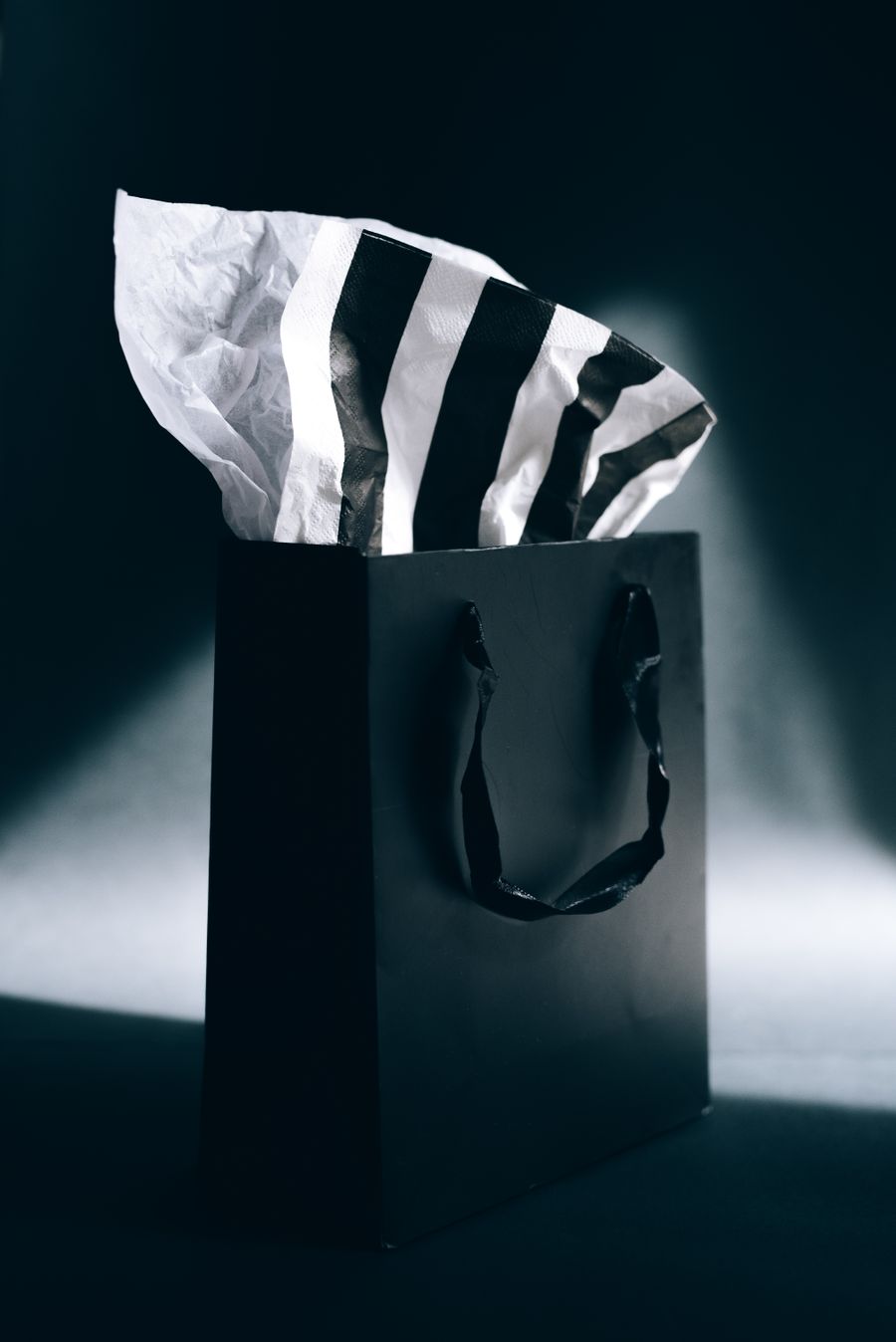
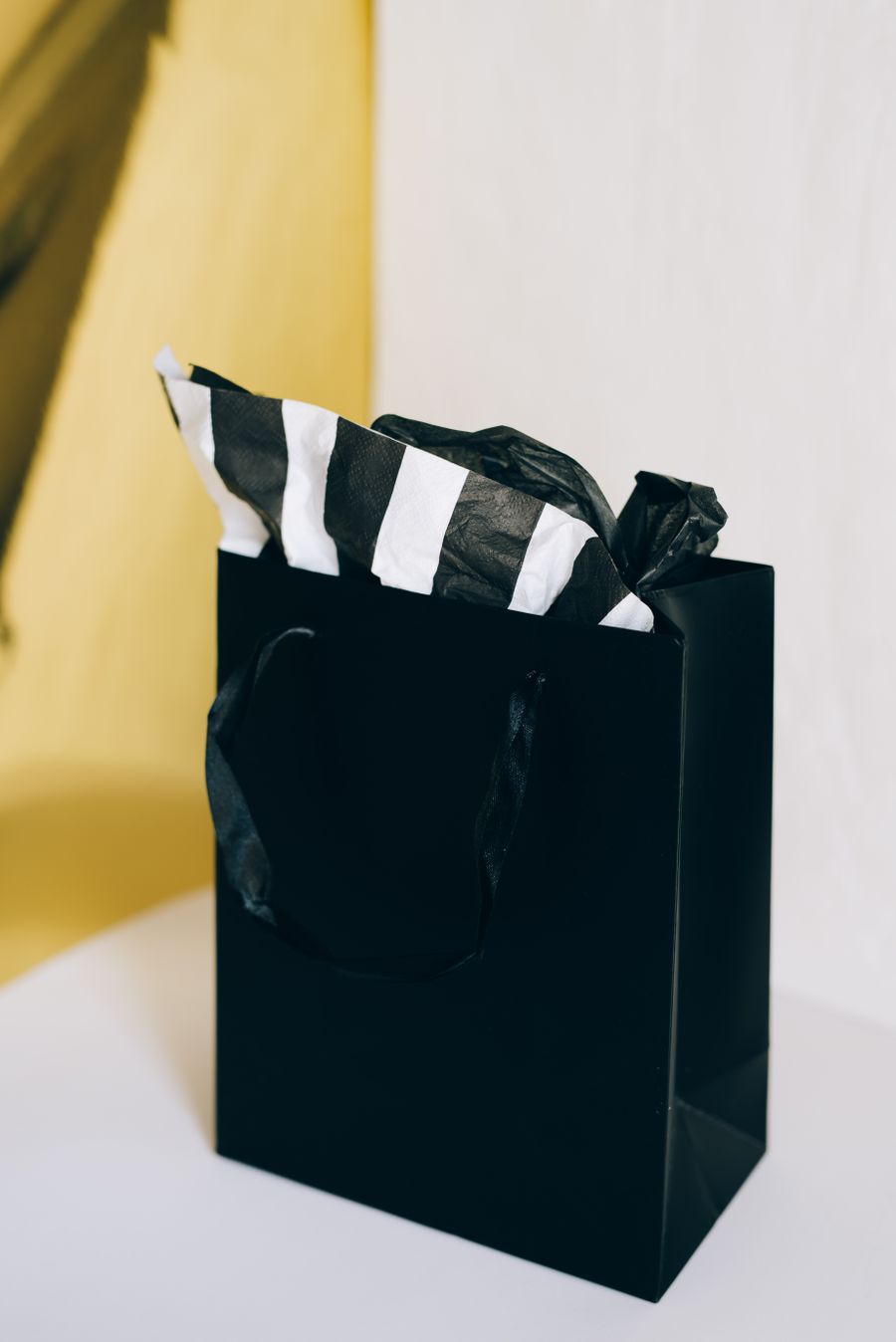
View → 05Our most photographed bag and our slowest to make. Foil on uncoated black is unforgiving: one pass, right temperature, or the whole sheet is scrap.
200 × 250 × 90 mm · 250gsm uncoated
View →Three things that decide whether the bag arriving in six weeks is the bag you pictured.
Bags are quoted width × height × gusset, and the gusset is the number everyone forgets. A 100 mm gusset takes a shoebox; a 60 mm one takes a scarf and looks empty holding anything else.
Size guideThe same logo on ribbed kraft, coated white and uncoated black is three different logos. Ink sinks into uncoated stock and sits on coated. Order the sample pack and hold them.
Board and stockHot foil needs a metal die made for your artwork — a one-off cost that lasts for every future run. It is the reason foil looks expensive on job one and cheap on job four.
How foil worksTalk To The Studio
Nine times out of ten the useful conversation starts with what is going in the bag. Tell us the object, the weight and where the bag will be handed over, and we will tell you which of the six it should be — including when the answer is the cheapest one.
Unit 4, Vyner Street Works
London E2 9DG
+44 20 7946 0412
studio@gussetry.example
Tuesday to Friday, 09:30–17:00
Sample pickups by arrangement